Home / Capabilities
Two layers to thirty-six — and the awkward boards in between.
One plant, four production lines and an engineering team that reads stack-ups for a living. If your board needs a hybrid dielectric, a 3-stage HDI build and a castellated edge in the same order, it stays in one factory.
At a glance
| Parameter | Range |
|---|---|
| Layer count | 2 – 36 layers (4, 6, 8, 10 and high-layer-count builds in routine production) |
| HDI | 1-stage to 3-stage sequential lamination, laser-drilled microvias, 8–14 layer HDI in production |
| Base materials | FR-4 (Shengyi, ITEQ, Nanya), high-Tg, halogen-free, thick copper, aluminium/metal core, ceramic, PTFE, Rogers RO4003C / RO4350B / RO3003 / RO4835, Taconic, IT180 |
| Surface finish | Lead-free HASL, ENIG, ENEPIG, immersion tin, immersion silver, hard gold, OSP |
| Solder mask & legend | Taiyo and Guangxin inks, matte or gloss, white/black/green/blue/red, ink-jet legend |
| Vias & structures | Blind, buried, via-in-pad with resin plugging, back-drilled, depth-controlled, castellated, countersunk |
| Special processes | Impedance control, metal edge plating, embedded resistance/capacitance, stepped cavity, rigid-flex and flex |
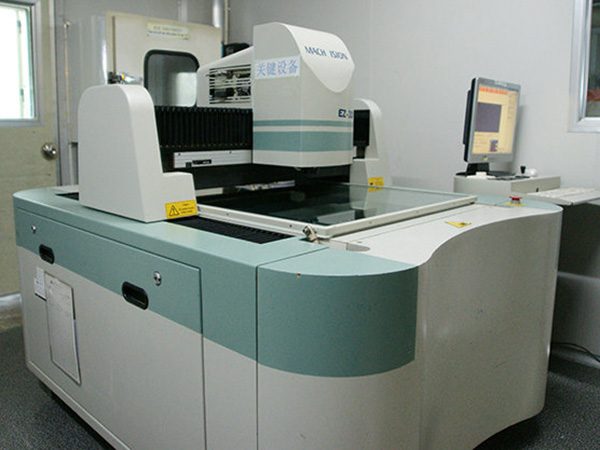
| Testing | 100% electrical test, flying probe (4-wire low resistance), AOI, X-ray, impedance coupon, microsection |
| Lead time | Set per order after engineering reviews your files — a firm date comes back with the quote, normally within one business day. Typical windows below; expedited builds (from 24 h) priced against your deadline. |
Ranges shown are our routine production envelope, not a theoretical maximum. Send the stack-up you actually need and engineering will confirm feasibility — including the parts we would change.
Typical lead times
What "normal" looks like here
These are the windows we hold in routine production — not best-case marketing numbers. Every quote carries a firm date against your specific files, and if a build is outside these windows we tell you before you order.
| Board type | Prototype — fabrication time | Production (500+ pcs) — fabrication time |
|---|---|---|
| 2-layer FR-4 | ~5 working days | 2–3 weeks |
| 4–6 layer FR-4 | 7–8 working days | 2–3 weeks |
| 8–10 layer / impedance-controlled | ~15 working days | Quoted per build |
| HDI, high-frequency, rigid-flex & special processes | 18–25 working days | Quoted per build |
Expedited
Need it faster?
For standard FR-4 processes we hold a limited expedited slot each day, priced against your deadline and requirements:
- 2-layerfrom 24 hours
- 4-layerfrom 48 hours
- 6–8 layerfrom 72 hours
Special processes are quoted per build. Send your files with the target date and we'll confirm the same day whether a slot is open — we only promise what the floor can actually hold. These are fabrication times; express transit adds 3–5 days.
All times above are fabrication time only — not the date the boards reach your door. The clock starts when files are released after DFM sign-off. Add 3–5 days for express shipping to the US or EU; your quote states the delivery date at your address.
Layer count & stack-up
A 4-layer control board and a 22-layer backplane are not the same job. Sequential lamination adds press cycles.
Materials
High-frequency and hybrid builds need different lamination profiles and longer conditioning than straight FR-4.
Special processes
Back drilling, castellation, cavities, heavy copper and tight impedance all add dedicated steps.
Finish & quantity
ENEPIG or hard gold take longer than HASL; volume is scheduled against the panel, not the piece count.
01 — Multilayer FR-4
The bread and butter, done without shortcuts.
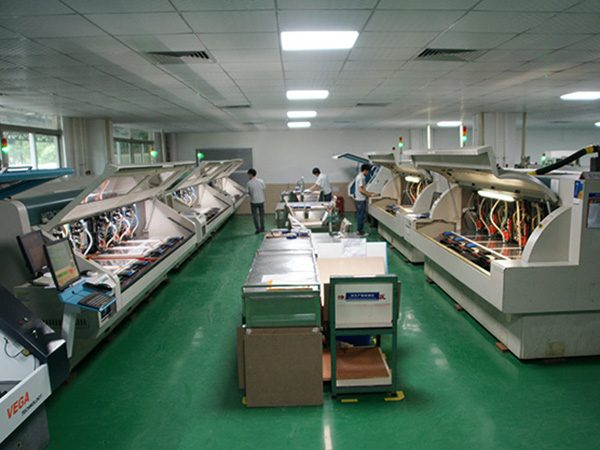
From 4-layer control boards to 22-layer backplanes. The difference between a good and a cheap multilayer board usually shows up six months later — in barrel cracks, measling or delamination — so lamination cycles and material conditioning are where we refuse to compress.
- High-Tg and thick copperFor thermal cycling and high-current designs; 2 oz and heavier on request.
- Impedance-controlled stack-upsCoupon-verified, with the measured report attached to the shipment.
- Mixed material buildsHigh-frequency cores bonded into an FR-4 stack where the RF section needs it and the budget doesn't allow a full Rogers build.
02 — HDI
Density without yield loss.
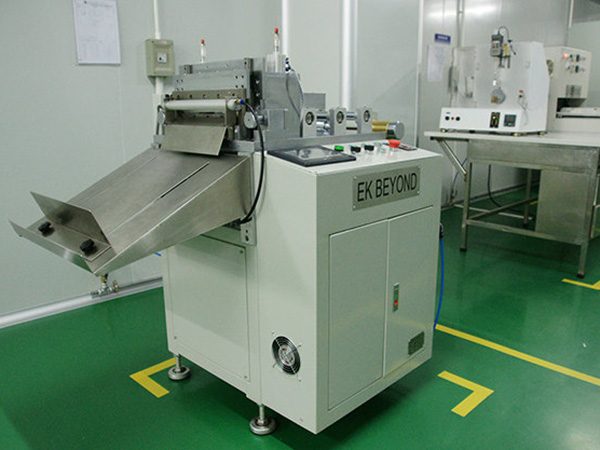
1 to 3-stage HDI for fine-pitch BGAs, module boards and anything where the component pitch has outgrown the routing space. Laser vias, sequential lamination, resin-plugged via-in-pad — and a DFM pass on pad sizes before tooling starts.
- 1–3 stage builds8 to 14 layer HDI in routine production, up to 3-stage lamination.
- Via-in-pad with resin pluggingPlanarized and copper-capped, suitable for thermal pads under QFNs.
- Fine-line imagingLDI exposure in a 100k-class cleanroom, on both inner and outer layers.
03 — High frequency
Rogers where it counts, FR-4 where it doesn't.
Full high-frequency builds and hybrid stack-ups: RO4003C, RO4350B, RO3003 or RO4835 bonded to FR-4 or IT180, so the RF section gets the dielectric constant it needs and the rest of the board stays affordable.
- Hybrid laminationPTFE and hydrocarbon cores bonded to FR-4 without delamination at reflow.
- Dk/Df-aware stack-upsImpedance targets verified on coupons made from your actual materials.
- Antenna and RF module boardsTelecom, radar, test equipment and wireless modules.

04 — Rigid-flex & special processes
The orders other factories quote slowly.
Rigid-flex boards, castellated modules, back-drilled high-speed backplanes, metal edge plating, stepped cavities, embedded passives. These are the builds where the tooling conversation matters more than the price list — so we have it with you before quoting.
- Rigid-flex and flexCoverlay, stiffeners, and controlled bend areas for compact assemblies.
- Module-friendly featuresCastellations, half-holes, countersinks and depth-controlled drilling for SMT modules.
- Back drillingStub removal for high-speed channels, with impedance verification.
Not listed?
If your stack-up isn't on this page, that's usually a conversation, not a no.
Send the Gerbers, the material callout and the quantity. Engineering will confirm what's feasible, what isn't, and what we'd change to make it cheaper to build.